English 中文
faq

WPC Skin Door vs. WPC Painted Door: Key Differences, Target Markets, and Buyer Guide

2026-10-31
Two WPC doors can look similar in a catalogue yet follow very different production routes. A laminated WPC skin door uses an assembled structure: PVC film is laminated onto WPC door skins, 
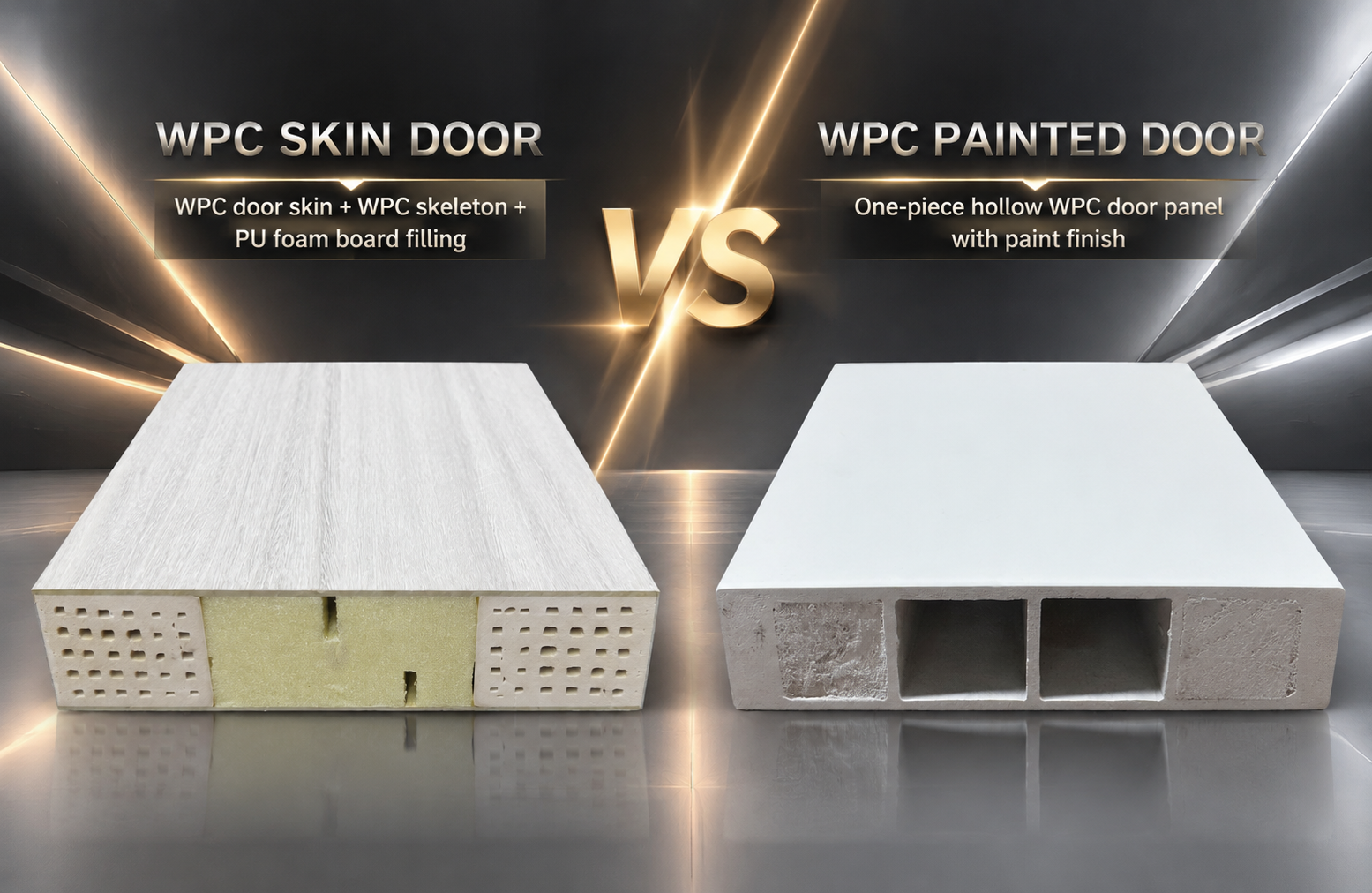
which are assembled with a WPC, LVL or wood skeleton and filling; the edges are sealed. A WPC painting door starts with a 40 or 45 mm extruded WPC door panel, depending on the 
model, and receives a sprayed finish.
The laminated WPC skin door suits fixed designs and price-sensitive bulk orders. The WPC painted door allows flexible colour selection and a refined, modern finish. For distributors and project contractors comparing a WPC interior door for an apartment project, assess a complete WPC door set rather than only a door-leaf photograph.

1. What Are WPC Skin Doors and WPC Painting Doors?

A WPC skin door is an assembled door leaf. Its visible faces are WPC door skins laminated with PVC film, supported by a WPC, LVL or wood skeleton and a specified filling, then finished at the edges. The skin supplies the moulded or woodgrain appearance; it is only one component of the leaf. Yingkang’s WPC skin door designs illustrate the range of face styles, while the approved construction drawing defines what is behind them.
A WPC painted door uses a one-piece extruded WPC door panel as the leaf substrate, available in 40 or 45 mm versions depending on the model. The panel is machined and painted to produce a flat or carved face with a chosen colour and sheen. Some markets call it a polymer door or polymer painting door. These two Yingkang routes both use WPC, but their structures, finishing steps and buying decisions differ.
Note: “Polymer door” may also refer to products made from other composite materials. A quotation should identify the substrate as WPC and specify the coating system.

2. How Do Their Structures and Production Processes Compare?

WPC skin door: laminated skins, assembly and edge finishing

The assembled route has four main stages:
1. Laminate the face. Apply the specified PVC film to the WPC door skins for the approved colour or pattern.
2. Build the leaf. Prepare the specified WPC, LVL or wood skeleton and filling, then bond the skins to the assembly.
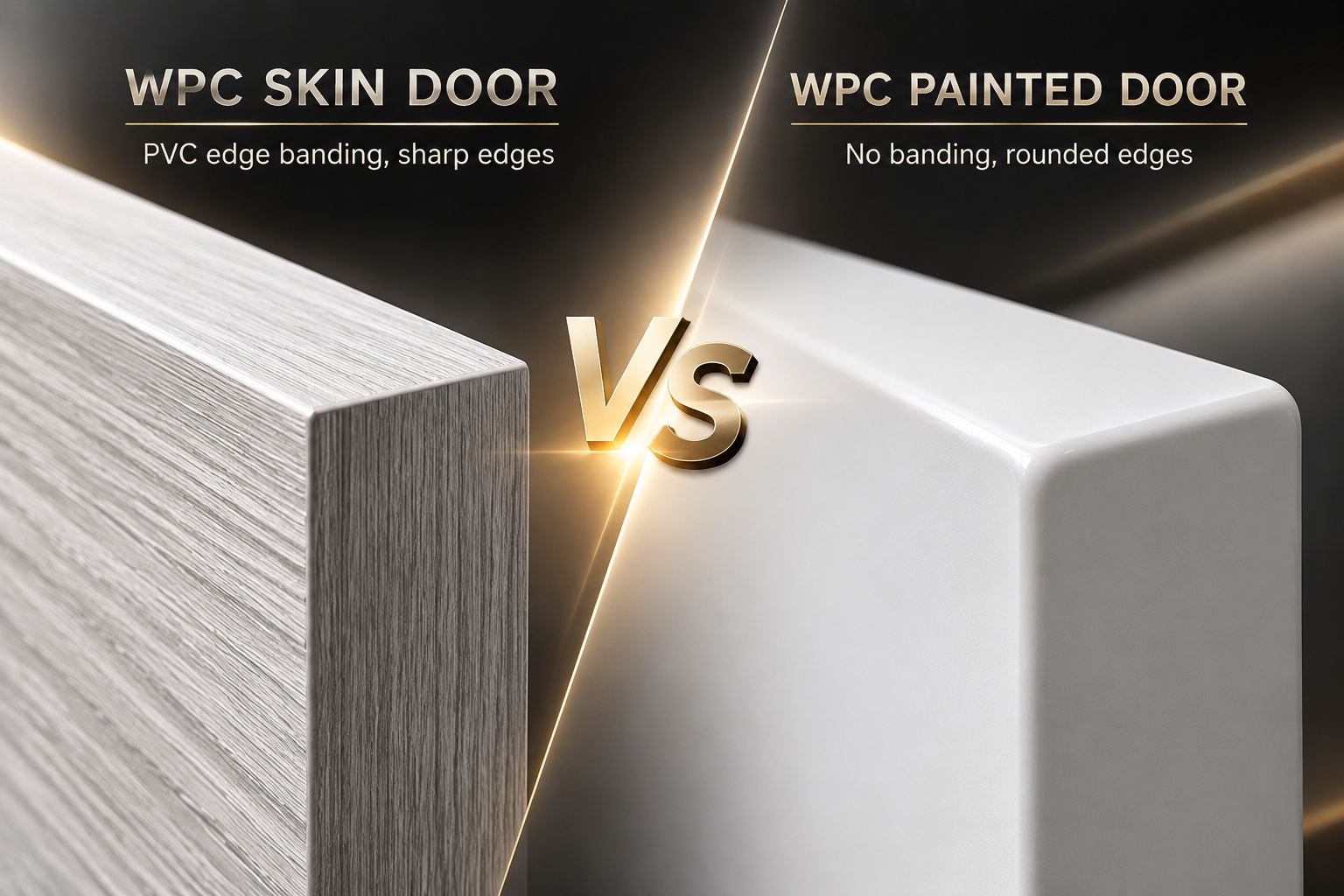
3. Finish the edges. Apply the specified matching-colour PVC edge band and seal the perimeter where faces meet the core.
4. Machine for fittings. Prepare lock and hinge positions to the approved door specification.
The filling, skeleton and edge detail depend on the quoted model. A sample of the WPC door skin cannot establish the quality of the complete assembled leaf.
This route does not require a complex spray-paint cycle for every standard door. That makes repeated patterns practical for larger runs and can give a lower entry price than a comparable custom-painted set. Prices are comparable only when the door leaf size, frame, architrave, hardware preparation, packaging and order quantity are the same. PVC film grade, edge-sealing method and the selected core can all change the price of a skin door.

WPC painting door: extruded panel and a longer finishing route

The painting route starts with a WPC panel and adds a separate finish sequence:
1. Extrude the panel. Form the specified 40 or 45 mm WPC door panel.
2. Prepare and machine. Sand the panel, carve it if required, and cut lock and hinge openings.
3. Coat the face. Apply primer, prepare the surface again, and spray the specified topcoat.
4. Dry and inspect. Allow the coating to dry before finish inspection and packing.
Yingkang's factory tour shows our production environment. Agree the actual coating sequence and finished sample for the ordered model.
Painting introduces coating materials, skilled surface work, finish inspection and drying time. This is why a painted WPC door normally needs a higher budget than a standard film-faced skin door of comparable specification. The extra process buys a different result: a continuous painted appearance, adjustable colour and more design freedom.
Buyer note: Confirm whether the quotation covers an unfinished WPC panel, a painted leaf or a complete set. These are different supply stages.
WPC skin door and WPC painted door internal structure comparison

3. What Does Each Door Do Well, and Where Are Its Limits?

For a skin door, evaluate the whole assembly in this order:
  • Material: the WPC door skin profile and PVC film grade define the visible design.
  • Structure: the WPC, LVL or wood skeleton and filling define the assembled leaf.
  • Surface: the moulded WPC door-skin profile and PVC film determine the visible pattern and colour.
  • Edge: the edge treatment protects the transition between faces and core.
  • Installation: the frame, architrave and fitting determine how the set sits in the opening.
A well-finished face cannot compensate for poorly sealed edges or a mismatched frame.
WPC skin door PVC edge banding versus WPC painted door rounded edge
WPC skin doors fit buyers who prefer classic woodgrain or moulded profiles, stable pricing and repeat bulk orders. Their standard designs are easier to reproduce across a distributor range or a multi-room project. The buyer should approve the film code, face pattern, edge detail and a complete sample, then use those references for later batches.
Note: The moisture performance of a WPC skin does not automatically describe the skeleton, filling or installed set.
  • Surface: a smooth, even painted face can suit minimalist interiors and provide a refined tactile finish.
  • Colour: standard choices include white, warm white, beige, grey and black; buyers can also specify an international RAL colour reference or a custom colour.
  • Finish: matte and gloss make the same colour look different, so approve colour and sheen together on a signed-off sample.
  • Application: custom colour can coordinate with wall paint or support a consistent look across a premium apartment project.

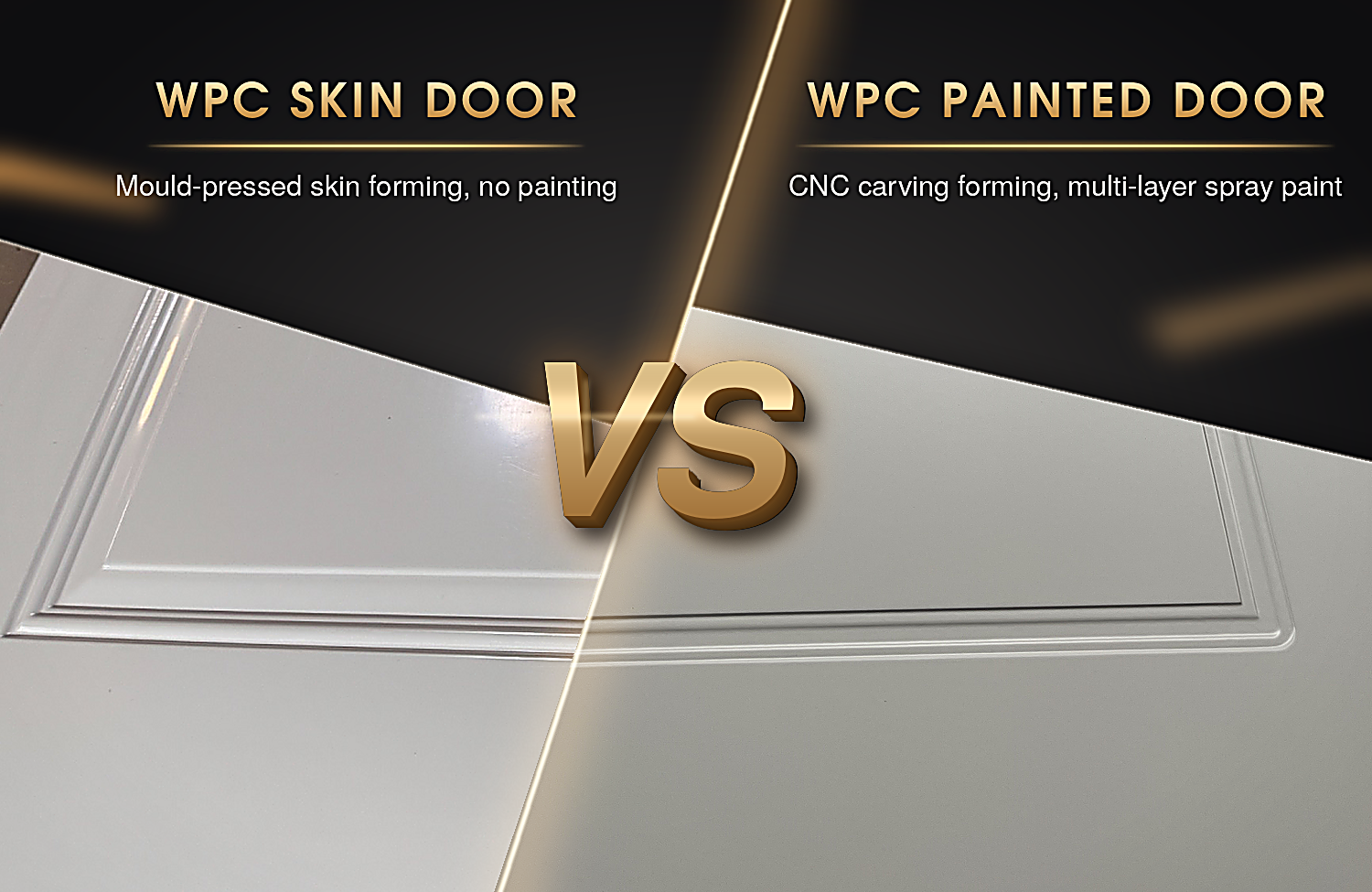
WPC skin door and WPC painted door surface finish comparison
The WPC panel itself offers moisture and termite resistance associated with the specified WPC material. The finished door still depends on its coating, joints, frame, hardware and installation. A sprayed surface can be scratched in handling or use, and a WPC substrate does not make paint scratch-proof.
Stable WPC formulation matters because consistent panels are easier to machine, sand and finish uniformly from batch to batch. Surface scratch performance, however, is governed mainly by the coating system and should be assessed on a finished sample under the project’s own conditions.
Yingkang is planning to introduce a painted finish for WPC skin doors. This option is intended to achieve a surface appearance similar to that of a painted door while retaining the assembled WPC skin door construction. Compared with a conventional painted door, it may offer a more economical choice. Final appearance and cost will depend on the selected design, finish specification and order requirements.

WPC Painted Door vs. Painted MDF Door

Compared with a painted MDF door, the Yingkang painting route begins with a one-piece extruded WPC door panel rather than an MDF board. That construction avoids relying on an MDF sheet as the painted substrate and may be advantageous where moisture exposure is a purchasing concern. It is reasonable to compare the two structures, but not to claim that every WPC door is stronger in every test. Where impact resistance, screw holding or load matters, ask for reports on the actual door construction and comparable test methods.

4. Which Applications and Markets Suit Each Route?

Southeast Asia

Humidity, termites and cost are common specification concerns for interior doors. A standard WPC skin door can serve value-focused apartments, hotels and modern residential interiors when the whole assembly is selected for the site. For a bathroom, confirm the leaf construction, sealed edges, frame and installation exposure rather than assuming the WPC skin makes the complete door suitable for standing water. Local buyers may also value a standard door they can service or customize to their market.

Middle East and Africa

In many distributor and project enquiries, familiar styles, competitive pricing and repeatable supply make skin doors a practical starting range. Hotel and apartment orders can benefit from a fixed design and finish code across many openings. Climate, building requirements and the buyer’s preferred appearance still determine the actual specification; a painted option can be appropriate for a design-led project in the same region.

Latin America

The market includes both value-driven residential distribution and higher-finish projects. A wholesaler may choose film-faced skin doors for an accessible range, while a Brazilian apartment or renovation project may favour a RAL painted WPC door for its clean surface and coordinated colour. Product selection should follow the intended retail tier, local style and sample response rather than a single regional label.

Europe and selected Israeli residential markets

Flat, restrained painted faces can work well in the modern interior briefs seen in Spain, Portugal and parts of Israel. Colour coordination, surface quality and documentation may carry more weight here than a low initial price. Buyers should check the finished sample and the specific certificates or test reports required by their market or project. A generic statement that a WPC material is certified does not establish compliance for every finished door set.

5. Which Buyers Benefit Most from Each Door?

Distributors and wholesalers

Buying priorities: sellable patterns, landed price, packaging, minimum order quantity, supply continuity and batch consistency.
Distributors and wholesalers should begin with what their customers will actually buy. A WPC skin door offers a straightforward standard range because each leaf does not need a separate colour-matching and painting cycle. The distributor should fix the model, film and component codes before placing a repeat order. Yingkang can discuss standard styles and supply scope against those buying requirements.

Project engineers and contractors

Buying priorities: a complete set that fits the opening schedule, project budget and installation programme.
Project engineers and contractors may also favour skin doors when a hotel or apartment project needs many matching interior sets within a firm budget and programme. Their decision should include the opening schedule, finished wall thickness, frame, architrave and hardware, not just the leaf price. Confirm the WPC door frame profile for the wall build-up and check the edge and fitting detail on a full sample. Standardisation helps only when the approved set fits the actual openings.

Design-led buyers and specialist wholesalers

Buying priorities: approved colour, sheen, surface quality and consistency across rooms.
Design firms, premium-project buyers and specialist wholesalers are more likely to value a painting door’s colour and finish freedom. For a high-end apartment, a RAL reference may be the start, but the approval should also cover sheen, surface smoothness and how the door reads beside the wall. A physical master sample matters more than a digital colour swatch. The same principle applies to custom carving or a series of rooms that must share one visual standard.

Door factories finishing locally

Buying priorities: the supply stage, local finishing flexibility and clear responsibility for coating quality.
Door factories with their own carving, spraying and edge-processing equipment may prefer to buy an unfinished WPC panel and complete the finish locally. This can make small, colour-led projects easier to handle near the customer. The local factory then takes responsibility for coating quality and final inspection. Compare that route with a finished painting door on the same design, delivery stage and quality criteria.

6. WPC Skin Door vs. WPC Painting Door at a Glance

Quick read: Choose a skin door when repeatable styles and a controlled budget lead the brief. Choose a painting door when colour matching and a smooth, modern finish lead it. Compare the full set before deciding.
Comparison point Assembled WPC skin door WPC painting door
Base material WPC door skins + WPC/LVL/wood skeleton + filling One-piece extruded WPC door panel
Core construction WPC door skins + WPC/LVL/wood skeleton + filling + finished edges WPC door panel + complete painted finish system
Surface process PVC film laminated to moulded or textured skins Sanding, primer, sprayed topcoat and drying
Appearance Woodgrain and moulded interior-door patterns Flat or carved modern face with smooth paint
Colour choice Approved film and skin pattern range Approved paint sample, RAL reference or custom colour
Design flexibility Efficient repetition of standard styles Greater freedom over colour, sheen and carving
Moisture considerations Inspect WPC skin, specified skeleton, filling and edge seal Inspect WPC panel, coating, joints and complete set
Surface care Check film and edge wear on a full sample Protect painted face from scratches and handling marks
Surface feel Film texture or moulded relief Smooth painted feel, depending on finish
Production route Skin forming and lamination, assembly, edge finishing Panel extrusion, machining, coating and drying
Batch fit Strong fit for repeatable standard orders Standard runs or design-led colour batches
Typical buyer brief Distributor range or cost-controlled project Premium interior, design specification or local finishing
Positioning Accessible, standardised interior-door option More customised, design-led interior-door option
Edge treatment Matching-colour PVC edge banding, defined angular edges Extruded profile sanded directly, no PVC edge band, rounded smooth edge

7. How Should Buyers Make the Final Choice?

Make the final selection in three steps:
1. Define the brief. Choose the priority: a repeatable interior range at a controlled price, or a modern painted surface with a precise colour scheme.
2. Approve the right sample. For a skin door, inspect the face, core, edge, frame and architrave. For a painting door, inspect the finished colour, sheen and coating quality.
3. Compare like with like. Put the same leaf size, opening schedule, hardware preparation, packing and quantity on both quotations.
Send Yingkang your drawings, target market, order quantity, preferred style, finish reference and required supply stage through the contact page. With those details, the team can discuss the suitable WPC door construction, matching frame and sample requirements for your project.
Share:
Copyright © 2020 Yingkang All rights reserved.
Technical Support: Coverweb
WhatsApp: +86 18737185148