What Is a WPC Door? Materials, Structure, Types and Applications
2026-09-04
If your first question is “what is a WPC door,” the short answer is simple: it is a wood plastic composite door made from wood fibers or wood powder, PVC resin, and polymer materials. The mixture is formed at high temperature to create a stable substrate. For buyers, the real questions are practical: Will it handle humidity? What is inside it? Which type suits a hotel, apartment, bathroom, or residential project?
What Is WPC Door Material Made Of?
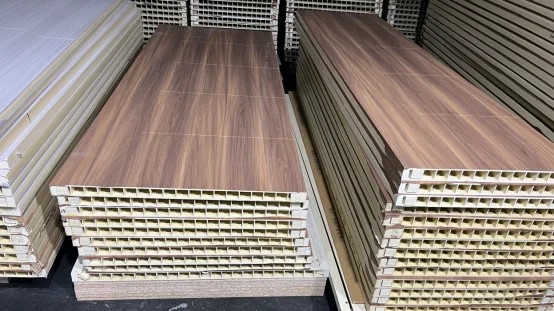
WPC door material combines wood-based particles with polymer materials. Unlike a conventional wooden panel, the substrate is formed through mixing, plasticizing, and extrusion. This gives a WPC interior door a wood-like look plus moisture resistance, strong toughness, anti-cracking performance, termite resistance, and dimensional stability.
Wood Fiber, PVC Resin, and Polymer Materials
Wood fiber or wood powder provides the main body of the material. PVC resin and other thermoplastic polymer materials act as binders and improve resistance to moisture, mildew, corrosion, deformation, and cracking. Common additional components may include inorganic fillers and processing additives to improve stability and processing performance. No glue is used to bond the main WPC raw material during extrusion. The product data also lists formaldehyde emissions as not detected and E0 compliant. For a project, ask for the test report required by your market.
How the Material Becomes a Door Panel
Production starts with raw-material proportioning and mixing, then high-temperature extrusion. The WPC door panel is sanded and finished with PVC film lamination, vacuum forming, or painting. Common door leaf thicknesses include 35, 40, and 45 mm.
How Is a WPC Door Built?
The WPC door structure changes with the product type. A WPC Skin Door is not built the same way as a Full WPC Door, even though both belong to the same WPC door family.
Door Leaf, WPC door skin, and Core
A WPC Skin Door uses two WPC door skins, an inner door skeleton, and filling material. The WPC door skin is extruded, laminated with PVC film, molded, and pressed together with the inner structure. Common fillings include honeycomb paper and PU foam board. PU foam board is often selected when better sound insulation is wanted. Skeleton options can include WPC, PVC, LVL, or wood, with different trade-offs in moisture resistance, strength, weight, and cost.
Door Frame and Surface Finish
A complete set also needs the WPC door frame, architraves, and hardware. Frames can be extruded, PVC-film wrapped, cut, drilled, and prepared for hinges and strike plates. Surface choices include PVC film lamination, vacuum forming, and painting. When comparing WPC door products, checking the whole door system is more useful than looking at the leaf alone.
What Are the Main WPC Door Types?
Different WPC door types solve different cost, finish, and project needs. Choosing by appearance alone can hide an important structural difference.
Full WPC Door and WPC Hollow Door
The Full WPC Door, also called a WPC Hollow Door or Pure WPC Door, is directly extruded from wood-plastic composite material. Its integrated structure provides strong moisture resistance and stable performance for humid interior environments.
WPC Painting Door
A WPC Painting Door, also called a polymer door in some markets, uses a WPC substrate followed by primer, sanding, and spray painting. It suits projects that need painted colors or a smooth finish.
WPC Skin Door and WPC Molded Door
A WPC Skin Door, also called a WPC Molded Door or PVC Laminated Door, uses two WPC door skins, a skeleton, and a core such as honeycomb paper or PU foam board. This structure provides more pattern and surface design options for volume projects.
WPC Assembly Door
A WPC Assembly Door is modular. It is not molded as one piece. You can configure components for varied dimensions. This helps when custom sizing is frequent. Why Do Buyers Choose WPC Doors? Buyers want fewer post-installation headaches. A waterproof WPC door fits perfectly in demanding zones. Builders specify them when dampness, swelling, mold, or termite threats matter. Top benefits include moisture resistance, anti-termite performance, strong toughness, and reduced cracking risk. WPC doors resist daily wear, maintain their shape, and can be processed with standard hardware installation methods. Easy cleaning and low maintenance make them suitable for apartments, hotels, schools, hospitals, and other interior projects. Where Are WPC Doors Used? WPC door applications extend beyond bathrooms. Builders install them in homes and commercial interiors. Humidity defense, durability, and steady supply dictate this choice. A WPC bathroom door suits damp air and frequent washing. Buyers pick a WPC hotel door for wetness resistance, noise control, and batch uniformity. A WPC apartment door needs balanced costs, rapid setup, and stable sizes. Other uses span villas, offices, kitchens, and coastal builds. How Does a WPC Door Compare With Other Interior Doors? Assess the crucial failure risks. In a WPC door vs wood door matchup, WPC offers stronger defense against moisture, bugs, and bending. In a WPC door vs MDF door comparison, wet-area performance dictates the gap. MDF swells after facing moisture. In a WPC door vs PVC door, construction differs. A solid WPC Door panel is extruded as one unit. Conversely, composite PVC-style doors rely on skins, inner frames, fillers, and glue. Initial pricing is just one metric. Upkeep and replacement risks will impact actual project costs later.
How Should You Choose a WPC Door?
Start with the room, then the structure. For bathrooms or humid regions, put moisture resistance high on the list. For hotels, check sound insulation, finish durability, and batch consistency. For apartments, size standardization and delivery capacity may matter more than a premium surface. Then confirm thickness, frame system, core, finish, hardware preparation, and packaging. If you need a custom WPC door, ask whether WPC door customization covers the leaf, frame, architraves, color, hardware holes, logo, and packing. For private-label purchasing, an OEM WPC door program should also define sample approval and quality checks before mass production.
What Matters When You Evaluate a WPC Door Supplier?
Once the material and structure are clear, supplier capability becomes part of the buying decision. A WPC door supplier should control key steps such as extrusion, finishing, frame processing, inspection, and packing. YingKang produces WPC door leaves, skins, frames, architraves, and related profiles, with dedicated extrusion and automatic finished-door lines. Its manufacturing scope covers Full WPC, skin/molded, painting, and assembly structures. It also supports OEM/ODM work, custom sizes, finishes, packaging, and complete door systems. Quality control includes incoming-material checks, in-process inspection, and finished-product inspection before shipment. When comparing a WPC door manufacturer, this ability to make both components and finished doors is more useful than a long list of factory statistics.
FAQ
Q1: What Is a WPC Door? A: A WPC door is an interior door made with wood plastic composite material, mainly wood fiber or wood powder combined with PVC resin and polymer materials through high-temperature processing. Q2: Is a WPC Door Waterproof? A: WPC material has strong water and moisture resistance, so it is widely used in bathrooms, kitchens, hotels, apartments, and other humid interiors. Q3: What Is Inside a WPC Door? A: It depends on the structure. Full WPC doors use an extruded WPC Door panel. Skin or molded doors may use a skeleton plus honeycomb paper or PU foam board between two WPC door skins. Q4: Which WPC Door Type Is Best for a Project? A: Full WPC suits moisture-focused applications, painting doors suit painted finishes, skin or molded doors offer broad design choices, and assembly doors work well when flexible sizing is needed. Q5: How Do You Check WPC Door Quality Before Ordering? A: Check the material specification, structure, thickness, frame system, surface finish, core, hardware preparation, test reports, sample quality, packaging, and the supplier’s inspection process.