English 中文
faq

Are WPC Doors Worth It? The Cost Behind the Price

2026-10-16

Are WPC Doors Worth It? The Cost Behind the Price

The cheapest quoted door leaf may not be the least expensive door to produce, install and sell. A factory must make it saleable; a distributor must stock it; a contractor must fit it. At Yingkang, we begin with those costs, not the leaf price alone.

Should you compare the price of a door — or the cost of owning and selling it?

For a door manufacturer, distributor or project buyer, what is the real cost of a WPC door? Use this calculation as the starting point: real door cost = purchase cost + processing cost + installation cost + maintenance cost + replacement risk. Some items belong to the factory, others to the seller or project owner. They still affect whether the door was a good buy.
The value side has five parts: lifetime value = initial investment + production efficiency + installation efficiency + durability + after-sales savings. Compare these dimensions, not just the quotation. A low purchase price loses appeal if finishing, missing components or replacement work raises the total.
For a door factory, calculate a saleable set: material, machining, assembly, labor, waste and rework, without double-counting labor. For a distributor, add storage, claims and replacement handling. For a contractor, include fitting, adjustments and later maintenance. Compare identical dimensions, finishes and component scopes.
Yingkang's cost plan is to match the supply stage to the buyer's operation. We can supply a WPC door leaf, frame and architrave together. A door factory may choose a prepared hollow leaf and retain final assembly; a project customer may specify a matched set. The buyer can then identify which sourcing and processing steps our supply removes from its own workflow, and which work still remains. The WPC product range helps define what is being quoted.
Cost item If buying a leaf only If specifying a matched Yingkang WPC set
Procurement Source the frame and trim separately Quote the leaf, frame and architrave together
Processing Confirm all remaining machining and assembly Specify the preparation required before delivery
Installation Resolve component fit on site Check the supplied set against the opening schedule
Use your labor rates, purchase records and project quantities to calculate any saving.

WPC Door Is Not Only a Door — It Is a Production Material

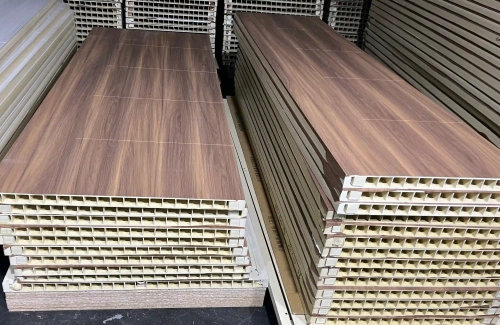
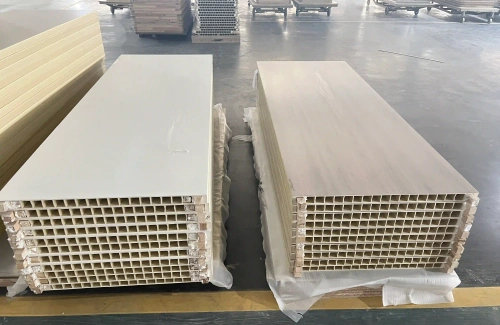
To a door factory, Yingkang's hollow WPC door can be a material for a new product line, not only a finished item to resell. Its documented route begins with material preparation and extrusion into a hollow door panel. The panel is sanded. Depending on the model, it is laminated or shaped and surface-finished; edge work, lock and hinge openings, inspection and packing follow. The ordered product determines which of those steps we complete before it reaches the customer's workshop.
The handover point is the production advantage. With a prepared WPC leaf, a factory need not reproduce Yingkang's extrusion and selected surface work. Its route may begin at sizing, hardware preparation or assembly. A sample run tests whether existing machines and staff can handle those steps, creating a practical route into WPC doors.
Compare this with the factory's current solid wood or MDF door. Wood may require selection and joinery; MDF may require board shaping and edge treatment. Compare the work needed after each quoted product arrives. The hollow-door lamination range shows one finish option; Yingkang's product overview describes hollow WPC doors and customization.
Production decision Solid wood or MDF door Yingkang hollow WPC door
Starting material Confirm raw stock, board or prepared leaf Specify extruded panel, prepared leaf or complete set
Surface work Plan the finish and edge steps for that construction Select lamination or other offered finish before handover
New product trial Test its own machining and assembly route Test the ordered WPC profile on the buyer's line
For OEM or ODM orders, send a drawing and identify the operations your factory will keep. Test setup time, labor and scrap for the selected WPC design.

WPC Door Factory Productivity Is Not Only About Machines

A line is productive when its output matches the order. Buyers need stable panel dimensions, repeatable specifications and a controlled finish across batches. Otherwise, staff spend time sorting, adjusting and remaking parts even while machines run.
First, agree the hollow panel structure, size and machining details for the model. A door factory needs a material it can process against the approved drawing, not a batch it must reinterpret at every station. Second, keep the leaf, frame and architrave profiles together in the order record. A contractor receiving a large project in phases needs the second shipment to fit the same opening schedule as the first.
Third, treat color as a specification. Record the PVC film or finish code, retain an approved sample and agree how later batches will be checked. “Same color” on a purchase order is too vague if the showroom name and production code differ. Yingkang's production value for a repeat buyer is a controlled reference for the next order, rather than an unqualified promise of zero color variation.
Productivity issue What can go wrong Control to request from Yingkang
Panel and machining Extra adjustment or rejected parts Approved dimensions and prepared-opening details
Complete door set Leaf, frame and trim do not match One confirmed component specification
Later batch Profile or finish differs from the first order Signed sample, finish code and repeat-order record
These references help factories plan work, distributors replenish stock and projects inspect later shipments. We offer the WPC door frame range alongside door leaves; confirm profile, tolerance, quantity and schedule in the order.

Who Benefits Most from WPC Doors?

Door manufacturers should ask: “What will it cost to turn this material into a saleable door?” Compare input price, machining, labor, waste, rework and design options. Yingkang can discuss the hollow leaf's finish and preparation stage, then provide a sample for a trial on the customer's line.
Distributors and wholesalers should ask: “Can we sell this model repeatedly without losing margin to after-sales work?” Check design, stock, replenishment, warranty, returns and complaints. Yingkang can supply model and component details so each sale retains a finish code and part reference. Our merchant cooperation page starts the discussion; confirm terms on the order.
Contractors should ask: “Will the delivered set help us finish the project openings on schedule?” On a hotel, apartment or office job, check the door schedule against every leaf, frame, trim piece and hardware opening. Yingkang can review that specification and the packed component scope, and discuss installation questions and replacement identification before shipment. Site labor, adjustment and missing-part costs belong beside the quoted unit price.
Developers and project owners should ask: “Can the same approved door specification be used through later phases and maintenance?” Record sizes, finish, frame section and model against each project area. Yingkang's matched components and repeat-order references can support that plan. Durability still has to be assessed for the actual room conditions and complete door system; the owner's value lies in a door that can be specified, maintained and identified over time.

The cost of a door does not end after purchase

The invoice is only the first cost. Processing, installation, use, maintenance and repeat orders follow. Compare the eight factors below for doors of the same size, finish and supplied components. Traditional wood and MDF doors have different constructions, so assess the specific alternative model.
Cost factor Traditional interior door WPC door
Initial purchase Price varies by material and included parts Price also varies; quote the WPC leaf, frame and trim together
Processing Cutting, assembly and finishing depend on the door structure Yingkang's hollow WPC route can supply standardized panels or prepared leaves, leaving a defined set of downstream steps
Moisture exposure The effect varies with the core, surface and edge construction WPC material offers moisture resistance; check the selected finish and complete door system for the intended room
Termite risk Exposure and damage risk vary by material WPC is offered for its termite-resistant properties; confirm suitability for the selected model and location
Maintenance Repair needs depend on use conditions Moisture and pest resistance may reduce maintenance in suitable settings; compare service needs
Project consistency Matching later batches depends on production records and controls Standardized WPC profiles, approved samples and finish codes support phased orders and repeat production
Customization Options depend on construction and finishing method Yingkang can discuss multiple WPC finishes, styles and matching frame profiles for the order
Long-term cost Changes with use, repairs and replacement May be lower if processing, durability and repeat supply offset the initial price; calculate by project
Use your own figures: factories should add machining and waste; distributors should add claims and repeat orders; project buyers should add installation and maintenance. Send Yingkang your drawing or opening schedule, finish, components and order pattern through our contact page. We can review a WPC configuration against those costs.
 
 
Share:
Copyright © 2020 Yingkang All rights reserved.
Technical Support: Coverweb
WhatsApp: +86 18737185148